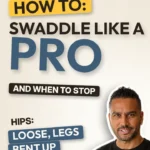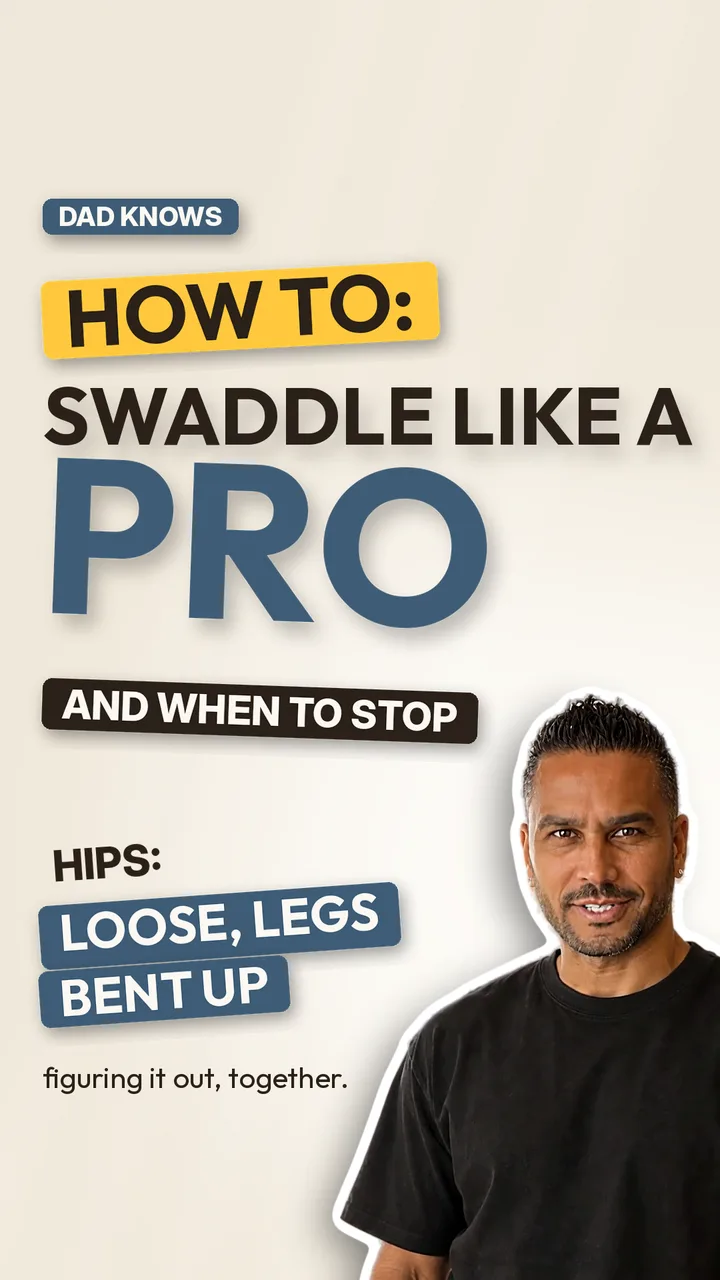

A good swaddle is snug at the arms, loose at the hips. Most dads get it backwards. A snug wrap around the arms can calm baby’s startle reflex, loose hips let the legs bend up and out, and once baby starts trying to roll, the swaddle is done.
Newborns startle easily, and those sudden arm movements can wake them up. A thin blanket wrapped snugly around baby’s arms and body can feel a bit like the womb, which helps calm baby and settle them to sleep.
Snug isn’t tight. You should be able to fit two or three fingers between baby’s chest and the swaddle.
This is the part most dads get backwards. Baby’s legs need room to bend up and out at the hips, like a little frog, so the hips can develop normally.
Keep the bottom of the swaddle loose. Legs wrapped straight down and tight together is the thing to avoid.
Stop swaddling as soon as baby shows any signs of trying to roll over. Some babies start working on rolling as early as 2 months, and every baby is different, so start watching early.
Swaddled babies who end up on their tummy have a higher risk of SIDS and suffocation. That’s why the swaddle has to go once rolling starts.
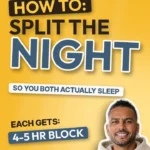
Getting good at the swaddle means the next middle-of-the-night settle can be yours. Change, swaddle, settle, and mom gets more rest while her body recovers. Here’s how to split the night.
The postpartum weeks are hard on both of you. Postpartum depression and anxiety can affect moms and dads, so check in with each other. If either of you feels low or anxious for more than a couple of weeks, talk to your doctor. Asking for help is a strength.
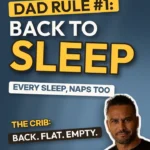
A swaddled baby always goes down on their back, on a firm, flat surface in their own crib or bassinet, never in your bed. Keep an eye on them so they don’t roll over while swaddled. More on safe sleep for babies.
Swaddling can make baby too hot. Use a thin blanket, skip the extra layers, and keep the crib free of loose bedding.
Weighted swaddles and weighted blankets can put too much pressure on baby’s chest and lungs. Leave them on the shelf.
Once the swaddle is done, a wearable blanket or sleep sack that leaves the arms free keeps baby warm without loose blankets. Sleep sacks that don’t swaddle can be used as long as you like.
The First 2 Weeks Home is a free 16-page guide for new dads, sent straight to your inbox, plus more dad tips along the way.
As soon as baby shows any signs of trying to roll over. For some babies that’s around 2 months, so start watching early.
Not when it’s done right. Keep the swaddle loose at the hips so the legs can bend up and out. Legs wrapped straight and tight is what to avoid.
No. A swaddled baby always sleeps on their back, on a firm, flat surface, and is watched so they don’t roll over.
General info, not medical advice. Check with your doctor.
Sources: HealthyChildren.org (AAP): Swaddling: Is it Safe for Your Baby?, Canadian Paediatric Society, Caring for Kids: Safe sleep for babies.
Follow along for more tips on Instagram, YouTube and TikTok.